
Why this guide exists
A lot of Bangalore pet parents are trying to feed their dog something they recognise — chicken, rice, a vegetable they would cook for themselves — without turning every evening into a second kitchen shift. “Fresh food” is the phrase that comes up. It is also used loosely. This guide explains what people usually mean by it, what is fair to expect, and how to change a diet without upsetting a stomach.
If you want help planning a bowl or, , write to wiggie.petcare@gmail.com with your dog’s age, weight and what they eat today. We reply with questions and, where we can help, a plan. This guide is not a diagnosis, and it is not a substitute for your vet.
What people mean by “fresh dog food”
The phrase is used for several different things. It helps to keep them apart.
- Kibble (dry food) is cooked, dried and packed to sit on a shelf. It is convenient. Quality varies widely.
- Wet or canned food is cooked and sealed. It has more moisture than kibble.
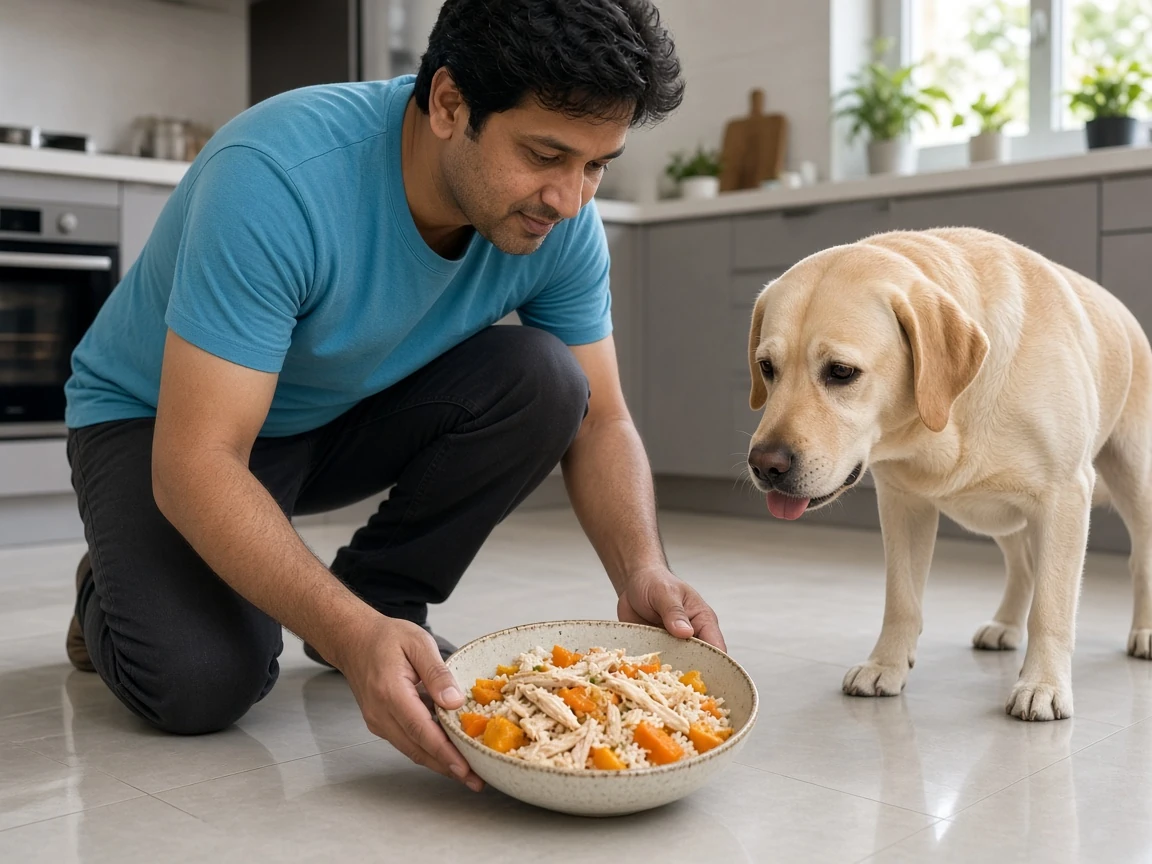
- Home-cooked food is what you make in your own kitchen — often chicken and rice, sometimes with a vegetable.
- Fresh cooked meals from a kitchen are prepared in a cooking facility, portioned, chilled, and sent to your fridge on a schedule, rather than dried for months.
- Raw diets are a different idea altogether (uncooked meat and bone). This guide is about cooked food, not raw.
“Fresh” should mean recently cooked and kept cold, with ingredients you can read. It should not be used as a magic word. For a fuller comparison, see What “fresh dog food” actually means.
Fresh cooked meals, kibble, and cooking at home
Kibble is familiar and easy to store in a Bangalore apartment. Many dogs do well on a complete dry food, if the product is appropriate for their age and you measure the amount. The usual complaints are picky eating, drinking too little water, or a parent who simply wants to see recognisable ingredients.
Cooking at home can work when the bowl is balanced. In practice, a lot of home bowls are chicken and rice on a loop, with very little calcium, or with Indian seasoning that does not belong in a dog’s food (onion, garlic, masala, excess salt). A longer note on those gaps is here: Cooking a balanced bowl at home.
A cooked meal from a kitchen sits between the two: you are not standing over a stove every day, and you should still be able to read what went in. Whether that meal is complete depends on the recipe, not on the word “fresh”. Ask who planned it, what is in it, and whether it is meant to be the dog’s full diet or a topper.
If your dog is on a prescription diet, stay with that plan until your vet says otherwise.
How to switch without a bad week
A sudden change is the usual reason a new food “doesn’t agree” with a dog. A calmer pattern:
- Days 1–2: a small amount of the new food mixed into the current food (about a quarter, if the stomach is sensitive, start with a spoon or two).
- Days 3–4: roughly half and half.
- Days 5–7: mostly the new food, then the full bowl if stools stay formed and appetite is steady.
Slow down if you see loose stools, vomiting, or a dog that refuses the bowl. Keep water down at all times. Serve cooked food at room temperature; do not leave it sitting out in a warm kitchen. A day-by-day version is here: A simple week-one plan for switching off kibble.
Storing cooked food in a Bangalore home
Cooked meals that are not dried need the fridge. In this climate, the practical points are simple:
- Get packs into the refrigerator as soon as they arrive.
- Use them by the date on the pack.
- During a power cut, keep the fridge closed as much as you can; if packs have warmed up for a long stretch, do not guess — throw them out rather than risk it.
- Do not leave an open bowl on the floor for hours.
More apartment-specific notes (heat, monsoon, delivery days): Feeding a dog in a Bangalore apartment.
Who this way of feeding suits — and who should wait
It can suit dogs that refuse kibble, households that want fewer mystery ingredients, and people who cannot cook a balanced bowl every day. It is a poorer fit when a vet has prescribed a specific diet, when a dog needs a food trial for a diagnosed allergy and you have not been given the go-ahead, or when nobody in the house can keep the packs cold.
Picky eating has more than one cause. A separate note is here: Picky eaters: why some dogs refuse kibble.
If you want help from Wiggie
Wiggie can talk you through options for cooked meals for dogs in Bangalore — including whether a short trial makes sense for your dog. There is no price on this page because it depends on . Write to wiggie.petcare@gmail.com. We will not ask you to use a different brand’s phone number.
This page is a guide only. For other at-home care in Bangalore, see pet grooming and dog training, or write to wiggie.petcare@gmail.com.
Prefer a short email: your name, your area or pin code, your dog’s age and weight, and what they eat now.
Frequently asked questions
Is “fresh dog food” the same as homemade food?
Not always. Homemade means you cook it. Fresh cooked meals usually mean a kitchen cooks them and sends them to your fridge. Both are cooked; only a balanced recipe is complete.
Is fresh food automatically better than kibble?
No. A complete, well-chosen dry food can be a solid diet. Fresh food is a different format. Judge the recipe, the portions, and how your dog actually does, not the label alone.
How long should a switch take?
Most dogs do better over about a week. Sensitive stomachs may need longer. Stop and call your vet if your dog is unwell.
Can I cook for my dog myself?
Yes, if the bowl is balanced and you avoid foods that are unsafe for dogs. Many home bowls miss minerals or use seasoned leftovers. Read where home cooking usually falls short.
Do you make food for cats?
How do I get in touch?
Email wiggie.petcare@gmail.com. Please include your dog’s age, weight and current food.
If you want cooked meals delivered in Bangalore, see our fresh dog food page, or email wiggie.petcare@gmail.com.